
Working prototype and recognition
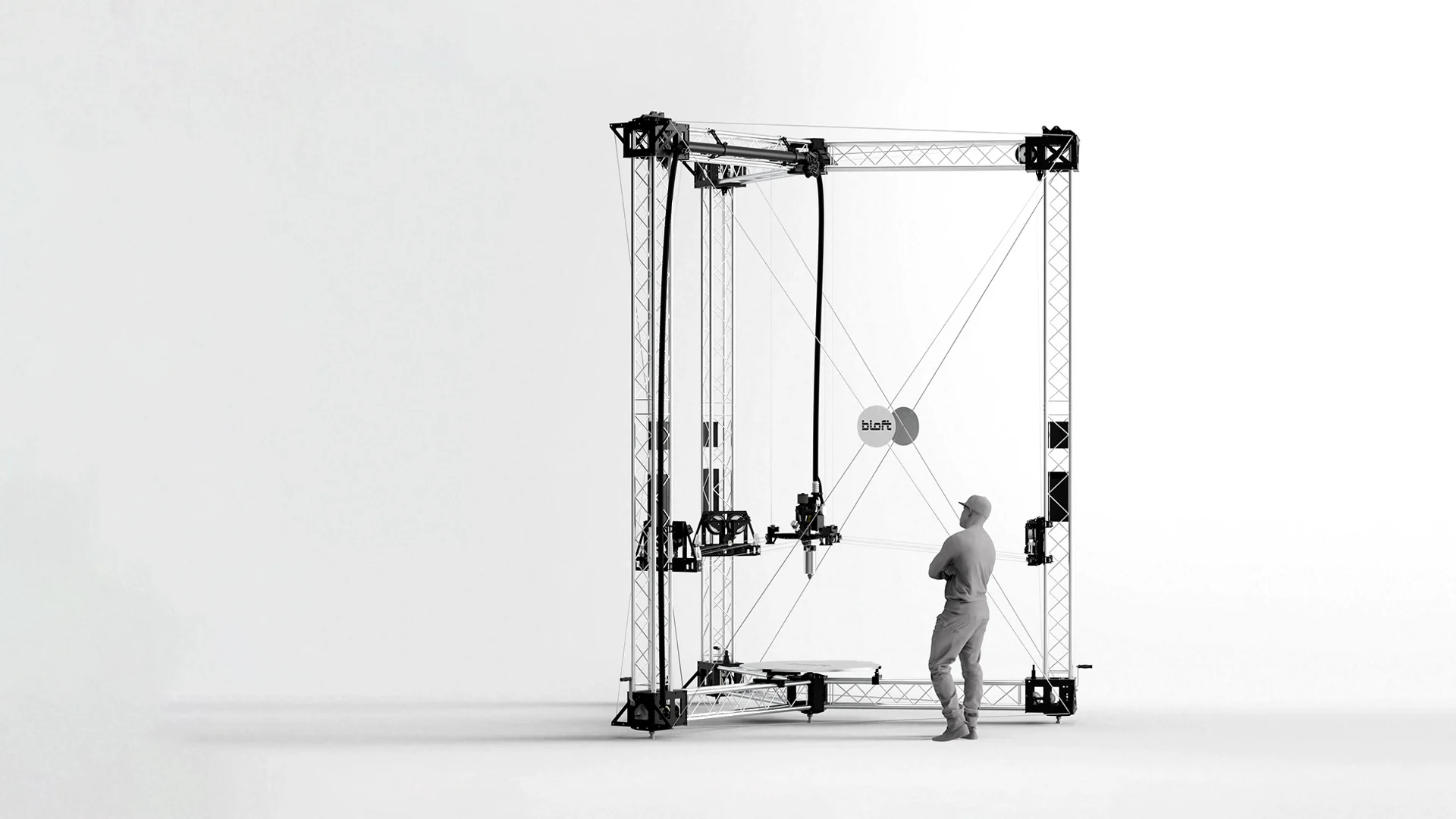
Bloft Mk2 became operational in May 2021 and was used in pilot projects exploring the 3D printability of plastic waste. The project received second prize in the Hackaday Prize 2022.
From printing waste to a new printer
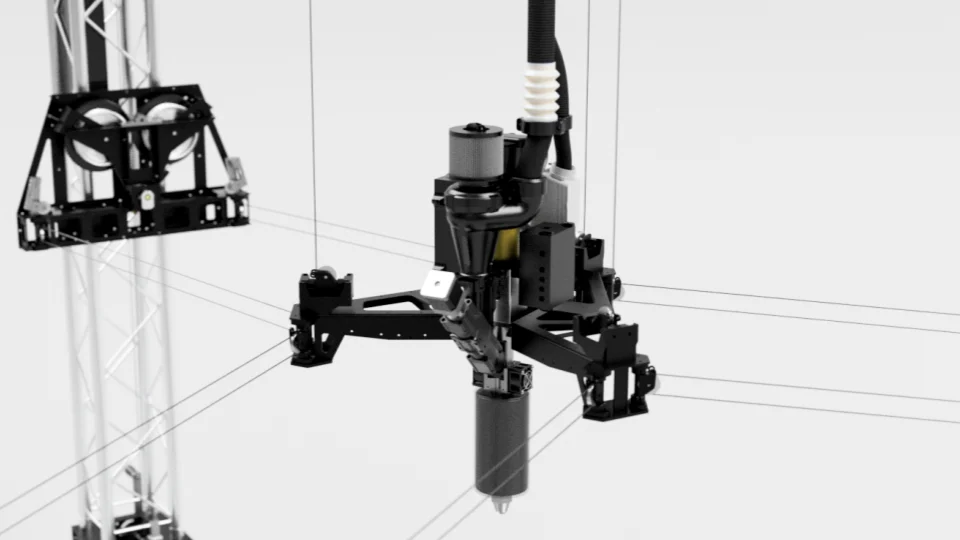
Working with my first large-format printer made the waste generated by failed prints and support structures impossible to ignore. That experience led to the development of a pellet-fed print head using fused granulate fabrication (FGF). Its greater weight required a stronger structure, which became the starting point for an entirely new printer: Bloft Mk2.
Designing for scale and accessibility
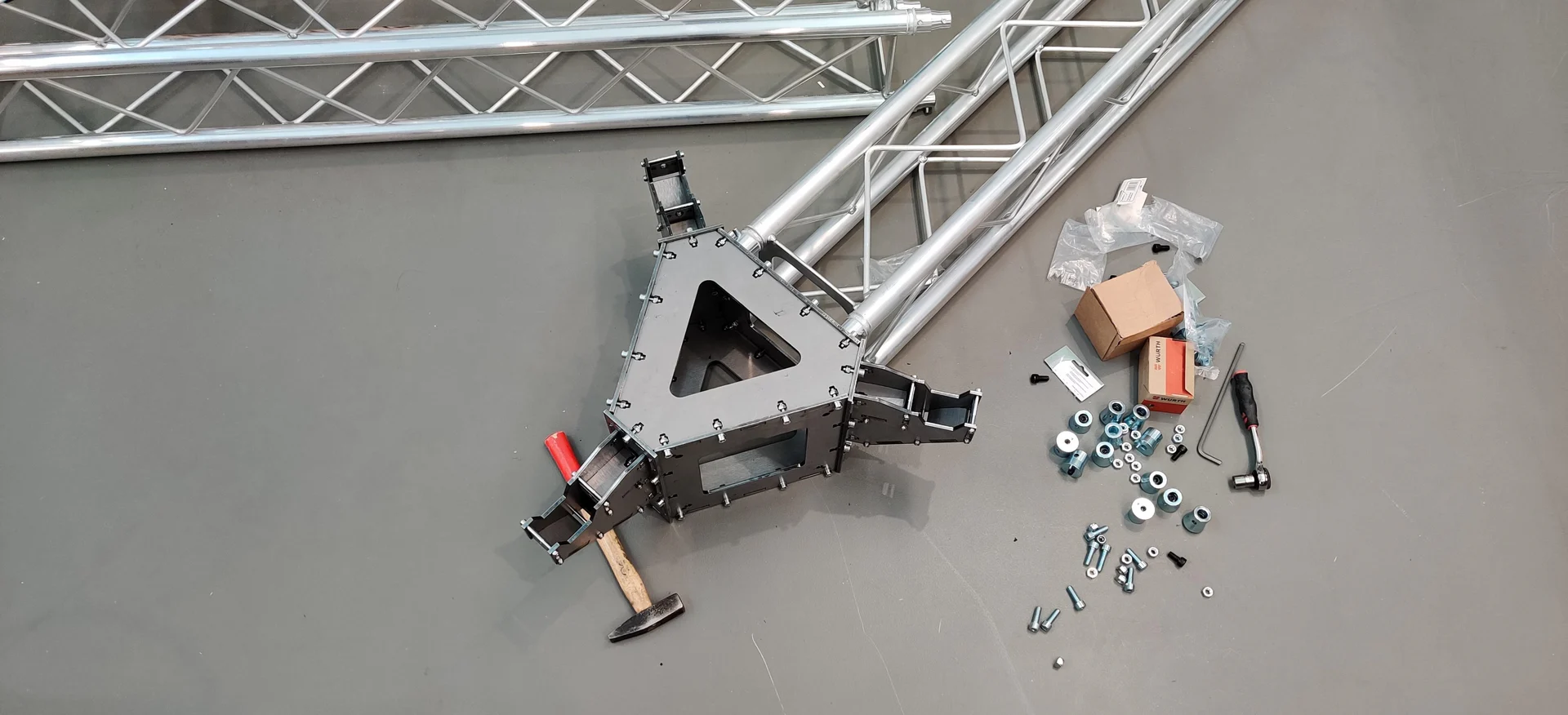
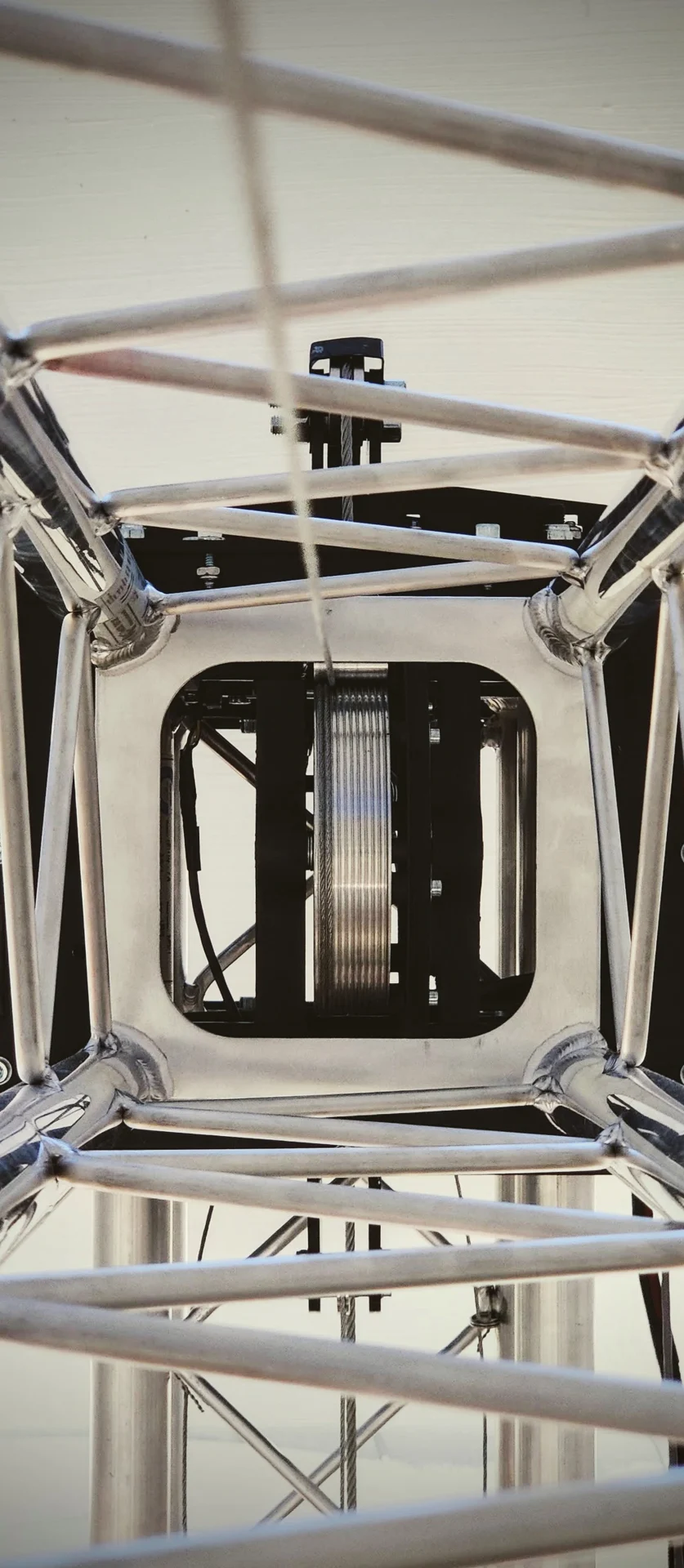
The frame needed to be rigid, modular and practical to build. I chose a lightweight truss system of the type commonly used in stage rigging. It provided a structural foundation that could be extended and transported, while keeping materials and components accessible to other builders.
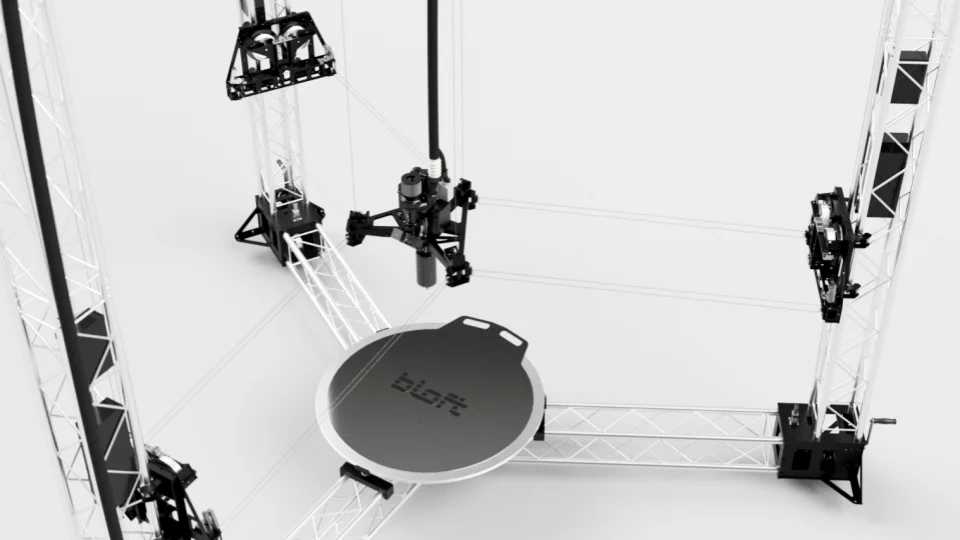
I also redesigned the cable arrangement to address a limitation of the first printer: its usable print width decreased as the object grew taller. Moving the cable anchor points along the vertical trusses made it possible to print objects approximately 2–2.5 meters tall on a bed one meter in diameter.
Building the printer
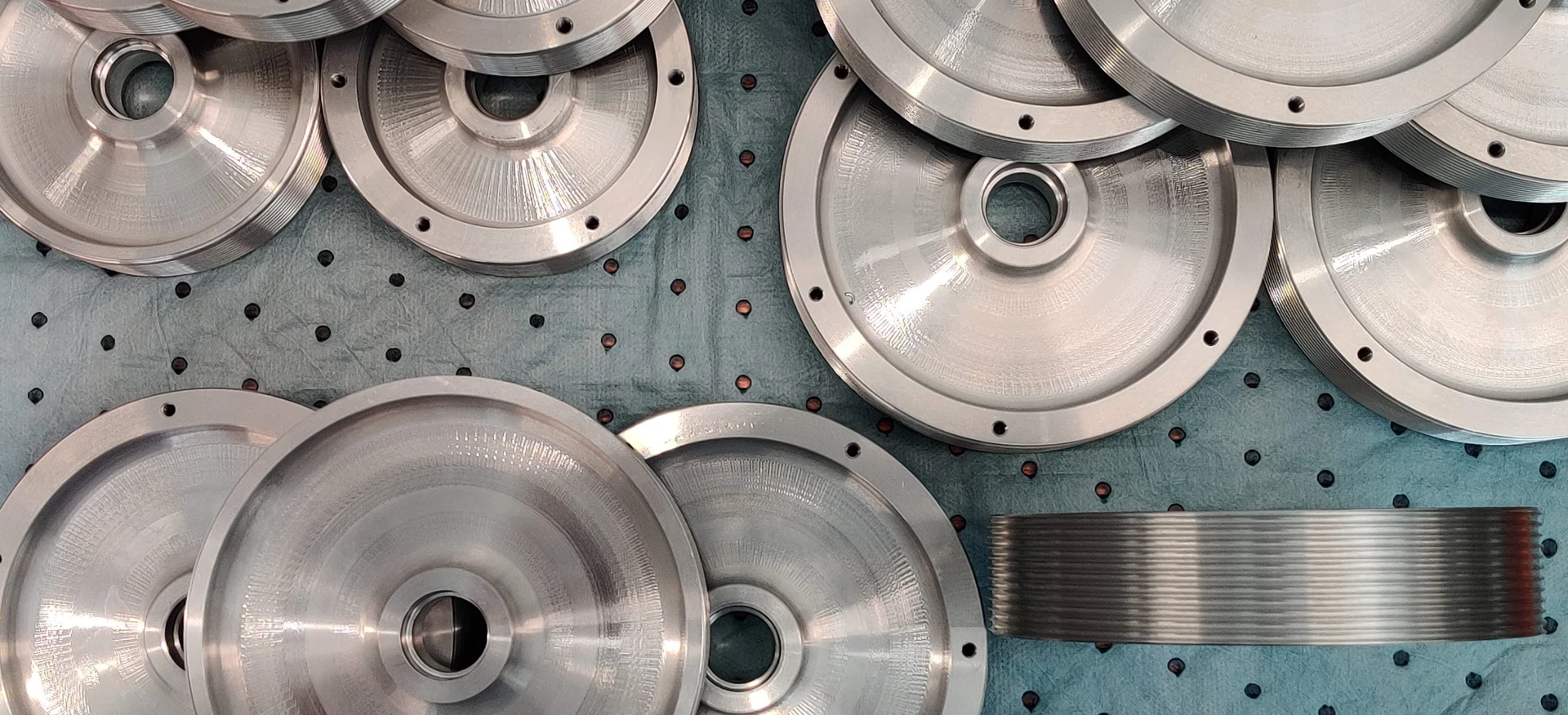
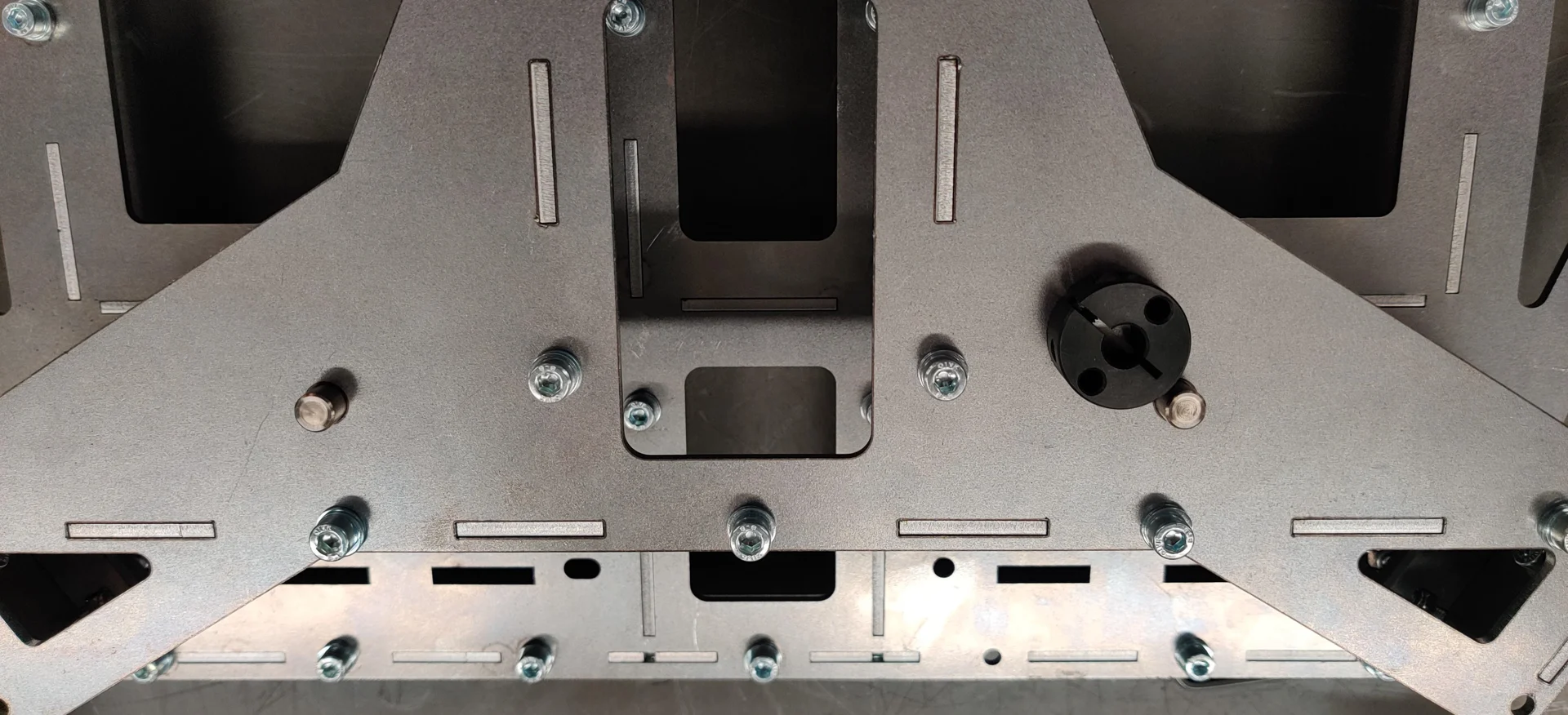
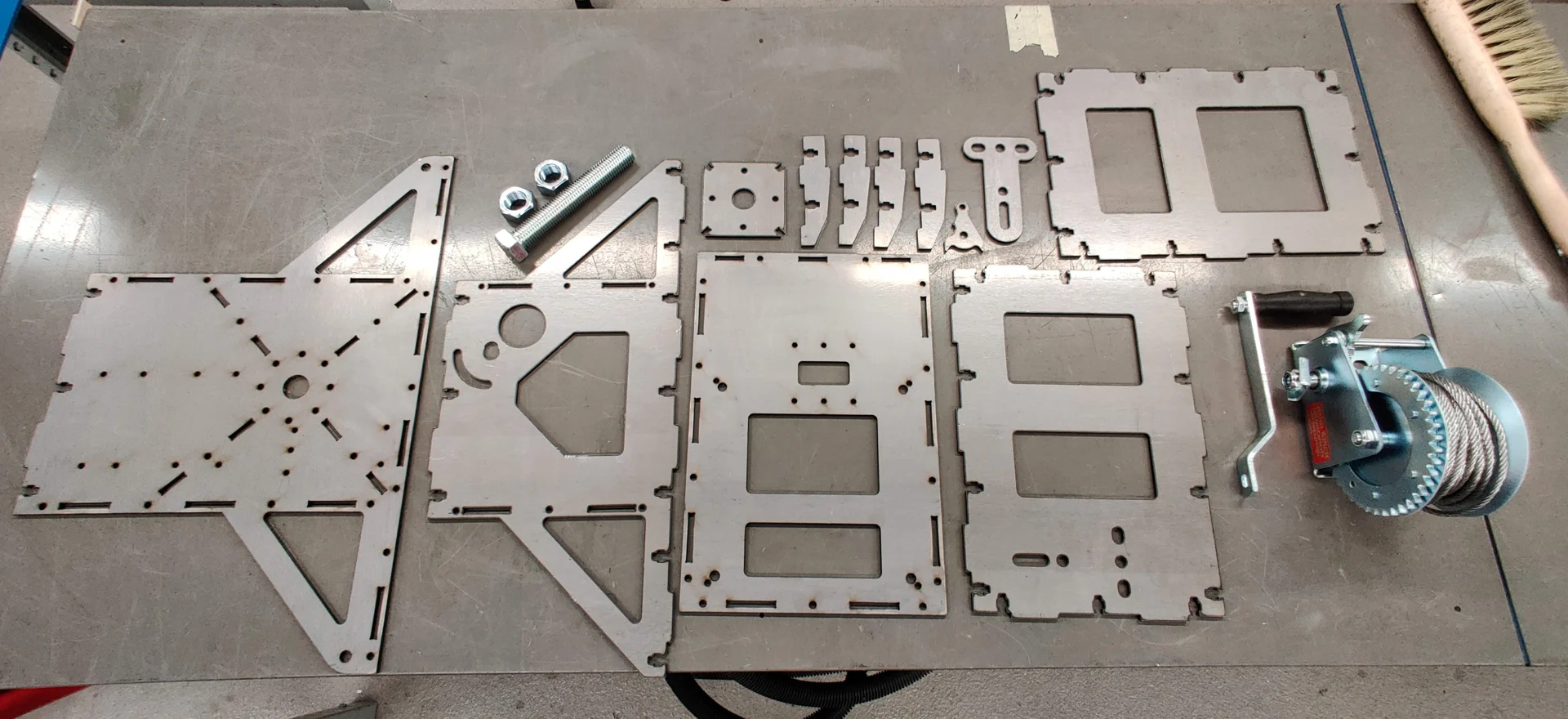
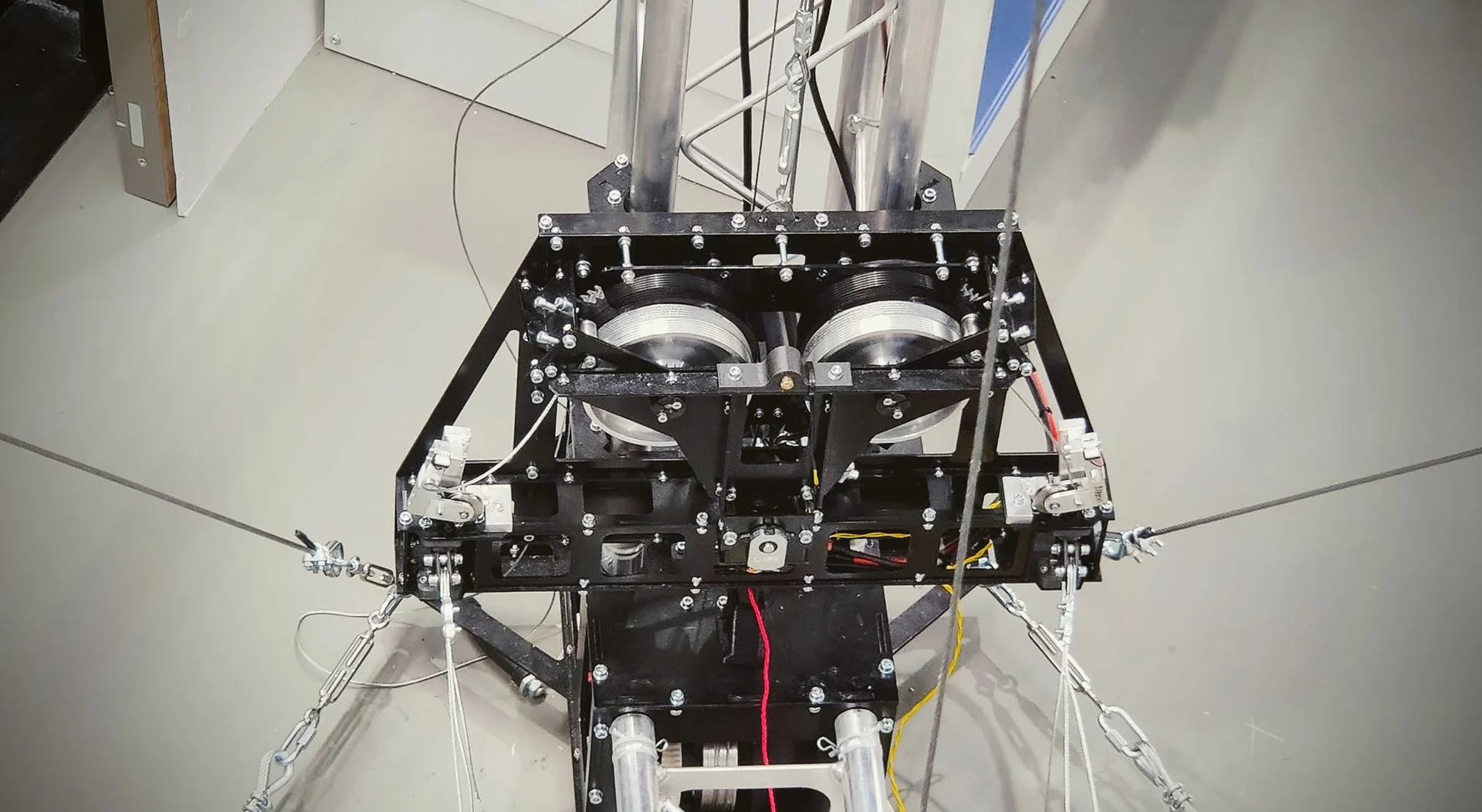
Details of the frame, individual components, and assembly process.
Material feed for longer print runs
To support longer print runs, we developed a material feed system that transported pellets or shredded flakes to the print head through a flexible hose. The hose ran alongside the power and signal cables and connected to a granulate dryer to keep the material dry.
Specifications
Overall dimensions: approximately 4.5 × 4.5 m
Weight: approximately 350 kg
Cylindrical build volume: approximately 1,000 mm in diameter × 2,500 mm high
XY travel speed: up to 1,800 mm/s
Extruder throughput: up to 500 mm³/s
Extruder temperature: up to 300 °C
Bed temperature: up to 100 °C